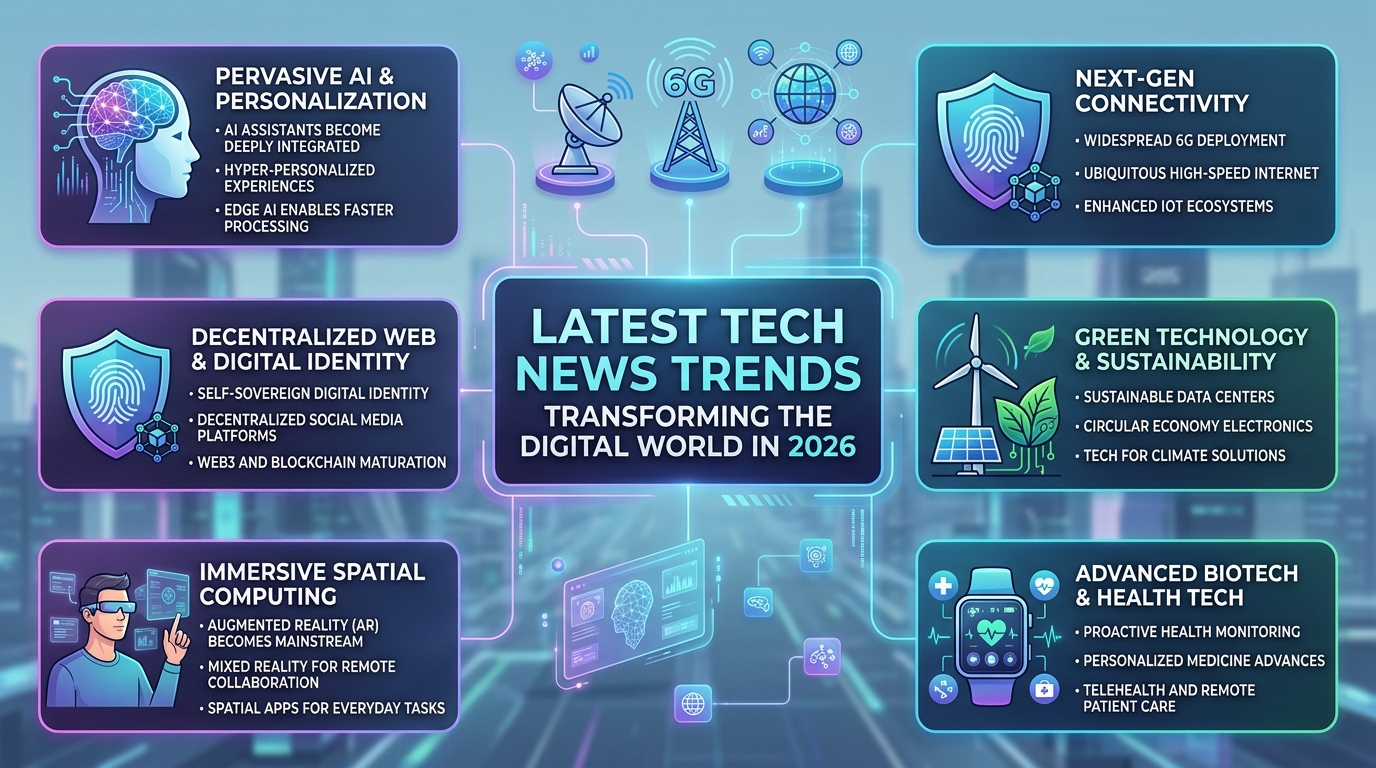
Artificial intelligence has moved out of the research lab and into the group chat, the office and the kitchen. The story of the next year is not a single dramatic breakthrough — it is a dozen quieter changes that together decide how we work, learn, shop and create. These are the artificial intelligence trends most likely to shape everyday life in 2026, and what each one actually means for people who never plan to read a research paper.
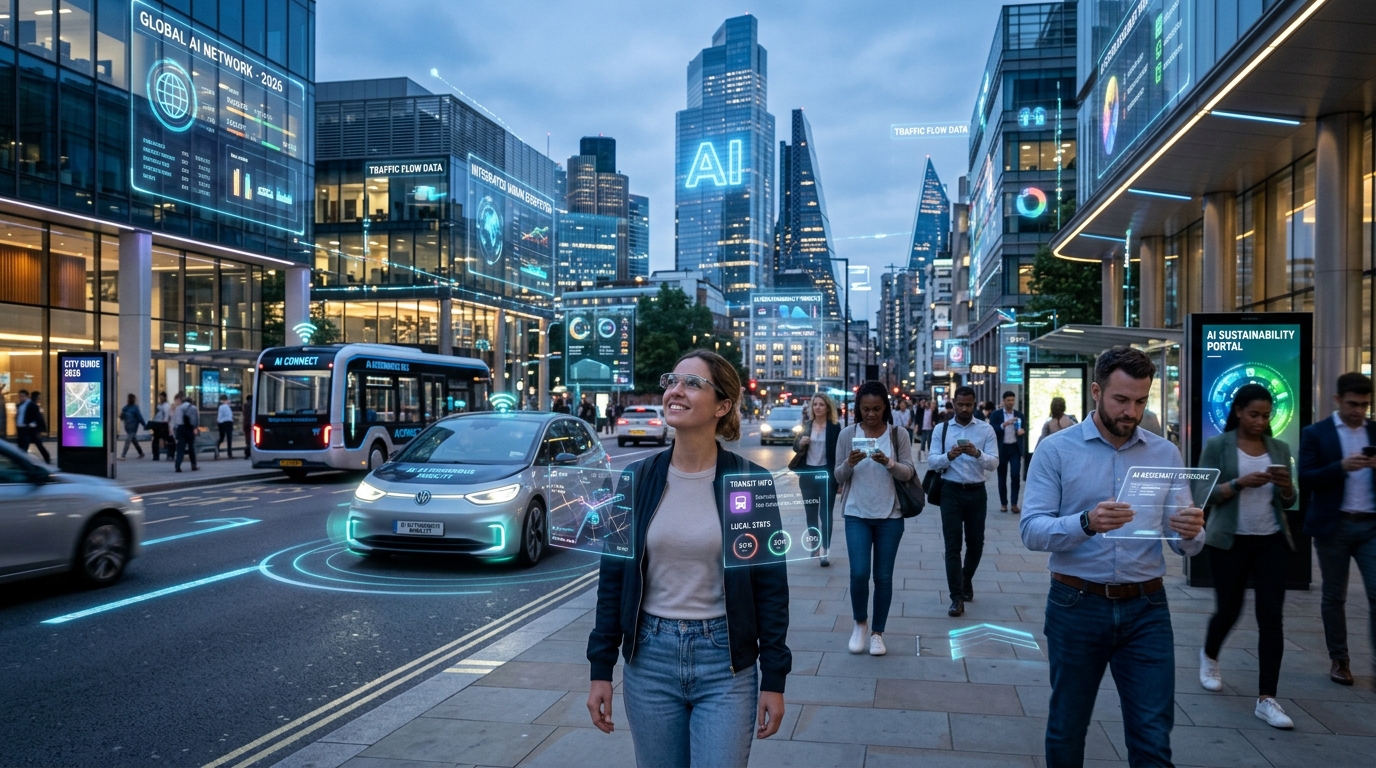
AI Assistants Become Proactive, Not Just Reactive
The first generation of assistants waited for questions. The new generation acts: drafting the reply before you ask, booking the meeting from a thread, summarising the document you have not opened yet. In 2026 the shift is from chatbot to agent — software that completes multi-step tasks across apps, with your approval at the important moments. The winners will be the tools that know when to act quietly and when to ask first; the losers will be the ones that interrupt you forty times a day and get switched off by Friday.
Small Businesses Get Enterprise-Grade Tools
Capabilities that once needed a technical team — customer support, marketing copy, bookkeeping, data analysis — now arrive as subscriptions a five-person business can afford. Our roundup of AI tools for small businesses showed owners already saving hours weekly; in 2026 those tools connect to each other, so the shop’s assistant can check stock, answer customers and draft the week’s posts from one conversation. The competitive gap between large and small firms narrows to a question of who adopts first.
AI Moves Onto Your Devices
Phones, laptops and even appliances increasingly run AI locally instead of sending everything to the cloud. On-device AI is faster, works offline, and keeps private data — your photos, messages and health information — on hardware you own. Expect flagship features like live translation, photo editing and voice assistance to work in airplane mode, and expect “does it run locally?” to become a selling point the way battery life is today. It is also a privacy story: processing at home is the simplest form of data protection.
Video and Voice Become Ordinary Creation Tools
Generating a short video, a voiceover or a product photo used to require a studio; it now requires a sentence. In 2026 the quality crosses the line where small creators and businesses use AI media routinely — a café’s daily special filmed by nobody, a training video narrated in six languages by the same voice. The craft shifts from production skill to taste: choosing, editing and directing. It also raises the value of the unmistakably real — live events, genuine faces and verified footage will carry a premium precisely because everything else can be generated.
Personalised Learning Reaches Every Student
AI tutors that adapt to each learner’s pace are moving from pilots into classrooms and apps at scale. A student stuck on fractions gets different help from one racing ahead, at 11 pm, without embarrassment. For adults, the same technology becomes a patient coach for languages, instruments and professional skills. The trend to watch is not replacement of teachers — classes still need humans for motivation, judgement and care — but the end of one-speed-fits-all homework, and with it, a quiet revolution in who gets to catch up.
Regulation and Labelling Catch Up
Governments spent the early AI years watching; 2026 is when rules with teeth spread: disclosure when content is AI-generated, responsibilities when AI makes decisions about jobs, loans and health, and watermarks that survive reposting. For ordinary users the visible change is labels — “made with AI” tags on images, videos and increasingly text — and clearer rights when an automated decision affects you. Businesses that build transparency in early will find it becomes a trust advantage rather than a compliance cost.
AI in Health Gets Practical
Behind the headlines, the most consequential trend may be administrative: AI drafting clinical notes, triaging messages, spotting patterns in scans for a human to confirm. Patients feel it as shorter waits and doctors who look at them instead of a screen. Wearables add another layer, flagging sleep, heart and recovery patterns early enough to matter. The boundary that holds through 2026: AI prepares, humans decide — and systems that respect that line earn adoption fastest in a field where trust is everything.
Jobs Change Before They Disappear
Workplace predictions swing between utopia and doom, but the visible 2026 pattern is task-level change: drafts, summaries, translations, first-pass analysis and routine coding are increasingly machine-made, while client relationships, judgement calls and final responsibility stay human. Roles are being rebuilt around supervision of AI output — which makes domain knowledge more valuable, not less, because you cannot check work you do not understand. The practical move for workers is unglamorous: learn the tools of your own trade early, volunteer for the pilot projects, and become the person who knows what the machine gets wrong.
What This Means for You
You do not need to master every tool. The durable skills of the AI era are judgement skills: asking precise questions, checking outputs that matter, knowing which tasks to delegate and which to keep human. Pick one assistant and use it deeply for a month; learn its strengths on your real work rather than demos. Keep your data habits deliberate — know what you share, and prefer tools that process locally when the data is sensitive. The people who benefit most from these trends are not the most technical; they are the most curious and the most critical, in that order.
The Bottom Line
The artificial intelligence trends of 2026 are less about machines becoming miraculous and more about AI becoming ordinary — proactive assistants, on-device processing, small-business superpowers, generated media, personal tutors, real rules and quieter hospitals. Ordinary is not boring; ordinary is when a technology starts changing daily life for everyone. This is the year to stop watching from the sidelines and start using it, carefully, on things that matter to you.