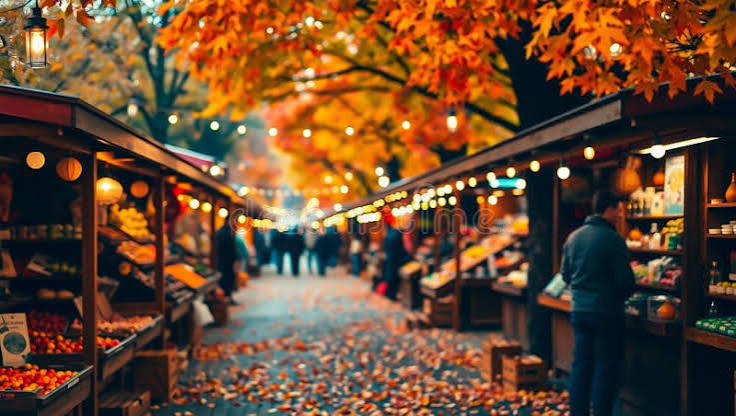

For years, the picture of autumn that circulated online was an indoor one. A mug on a windowsill. A blanket folded just so. A candle burning next to a stack of books nobody was reading. It was lovely, and it was also a little static, as if the whole season happened behind glass. This year, the mood has shifted. The same people who spent last October perfecting the look of their living rooms are now lacing up boots, filling tote bags and heading out the door, and they are bringing the cozy sensibility with them.
Call it the outdoor turn. The wide, warm, slightly nostalgic feeling that has come to define the fall aesthetic is spilling out of the house and into the neighborhood, the trailhead and the Saturday market. It is showing up in the way people plan their weekends, the way they dress for a walk that has no particular destination, and the way they talk about a short drive to a nearby town as if it were a proper trip. The season, in other words, is being lived rather than staged.
Why the mood moved outside
Part of the shift is simple fatigue with screens. After several years in which so much of daily life ran through a phone or a laptop, the appeal of a season that rewards being physically present has grown. Autumn is unusually generous in that respect. The air changes texture. Light comes in lower and warmer. Leaves make a sound underfoot that no app has managed to reproduce. People who never described themselves as outdoorsy are discovering that a forty-minute walk in a light jacket feels, for lack of a better word, restorative.
Another part is a quiet rejection of the idea that a season needs to be bought. The indoor version of autumn tends to come with a shopping list: new throw pillows, a fresh set of candles, a garland for the mantel. The outdoor version costs almost nothing. A path through a park is free. A market is free to wander even if you leave without buying a squash. The clothes people are wearing are mostly the same sweaters and boots they already owned, layered a little more deliberately. There is a sense that the best parts of the season were never for sale in the first place.
And there is a practical dimension. Days are shortening, and many people have noticed that if they wait for the perfect free afternoon, it never arrives. So they are folding small outings into ordinary days instead: a walk before dinner, a market run on the way home, a two-hour detour on a Sunday that would otherwise disappear into chores. The season is being spent in fragments, and the fragments add up.
The walk becomes the event
The most visible change is the humble walk, which has been elevated from an errand to an occasion. Around neighborhoods with mature trees, it is common in the late afternoon to see people moving slowly, hands wrapped around a travel mug, phones tucked away or used only for the occasional photo of an especially good maple. Some have taken to picking a single street and walking it once a week to watch the color progress. Others have adopted the habit of a post-dinner loop, timed so that they are heading home just as porch lights start to come on.
What is striking is how deliberately these walks are framed. People describe them as the main plan for an evening, not something squeezed in around the edges. A walk might be paired with a specific hot drink, a specific playlist or a specific route that passes a bakery with the doors propped open. The whole thing takes an hour and requires nothing more than a jacket, but it carries the weight of a small ritual, and rituals are what the season has always been about.
The gear, such as it is, has followed suit. Wool socks are having a moment for reasons that have nothing to do with fashion and everything to do with cold toes. Scarves are being worn for warmth rather than as accessories. A surprising number of people have rediscovered the pocket-sized thermos, which turns any bench into a café table. None of this is new, exactly, but the enthusiasm around it is.
Markets as the new living room
If the walk is the daily version of the outdoor fall aesthetic, the market is the weekend version. Farmers markets, harvest fairs, school fundraisers with a cider table and a hay bale: these have become gathering places for people who a few years ago would have spent Saturday morning scrolling. The appeal is not primarily the shopping. It is the atmosphere, which happens to be everything the indoor version of autumn tries to recreate with candles and filters, except real. There is the smell of kettle corn and wet leaves. There is a folk musician who may or may not be good. There is a table of apples in eleven varieties, most of which you have never heard of.
Vendors have noticed that visitors are lingering longer. People come with a hot drink and no list, and they treat the aisles the way they might treat a museum, stopping to talk to the person selling honey about which flowers the bees visited. Families make a morning of it. Couples treat it as a low-cost date. Groups of friends use it as a reason to get everyone in one place before the holidays scatter them.
What gets bought, when something does, tends to be small and immediate: a bag of pears, a loaf of bread that will be gone by Sunday night, a single pumpkin chosen with great seriousness by a child. The point is less the haul than the hour spent choosing, and the walk home with a paper bag that smells like cinnamon.
The rise of the micro-adventure
The third leg of the outdoor turn is the micro-adventure, a term that has been floating around for a while but seems to have found its natural season. The idea is modest by design: an outing that fits inside a single day, ideally a single afternoon, and that feels like a trip without the planning, packing or expense of one. A drive to a town forty minutes away for lunch and a stroll. A hike on a trail you have driven past a hundred times. A visit to an orchard, a covered bridge, a small-town bookstore, a lake with a bench that faces west.
People are treating these outings with the care once reserved for vacations. They pick a date and hold it. They plan a route that passes something worth stopping for. They pack a thermos, a spare sweater and a snack in a paper bag, and they leave with no particular schedule beyond being back before it gets fully dark. The result is a Saturday that feels like it lasted a week, which is exactly the kind of time-stretching that autumn seems built for.
The micro-adventure has another advantage: it is deeply forgiving of weather. A gray, drizzly day that would ruin a beach trip is, for a fall outing, practically ideal. Overcast light makes the color in the trees look deeper. A little damp in the air is the whole reason for the sweater. Even a wash-out can be salvaged with a diner, a bookstore and the drive home through wet leaves, which many people insist is the best part anyway.
What people are actually doing
Ask around, and the outings described are remarkably unglamorous, which is part of the charm. A common one is the leaf walk, in which the sole objective is to find the best tree in a given radius and stand under it for a while. Another is the cider run, a loop that starts at an orchard or market and ends on someone’s porch with paper cups. There is the bench hour, which involves finding a spot with a view and doing nothing for sixty minutes. There is the golden-hour errand, in which a trip to the hardware store is scheduled for the last hour of daylight purely because the light on the way home will be good.
Small groups have started walking clubs that are less about fitness than about company: five or six people, one loop, a stop for something warm at the end. Parents are taking children on scavenger hunts for acorns, red leaves and interesting sticks. People who live near water are discovering that a lakeshore in October is nearly empty and entirely beautiful. Runners are slowing down to walkers for the season and reporting that they do not miss the pace.
What ties all of this together is a certain lack of ambition, in the best sense. Nobody is trying to summit anything. The goal is to be outside, in the right clothes, with something warm to drink, while the world does its annual color change around you. The bar is low, and that is precisely why so many people are clearing it.
Dressing for the outdoor season
The clothes that are working for this outdoor version of the season are, unsurprisingly, the ones that work for walking. Layers beat bulk. A thin base, a mid-weight knit and a shell that can come off and go around the waist will carry a person from a cold morning start to a mild afternoon and back into a chilly dusk. Boots that can handle wet leaves and a little mud earn their place. A hat lives in a pocket for the moment the sun drops behind the tree line.
The colors people are wearing echo the landscape they are walking through: rust, olive, chestnut, cream, charcoal. It would be easy to dismiss this as coordination for its own sake, but there is something quietly pleasing about matching your surroundings for a couple of months a year. It is also practical. Earth tones hide the evidence of a bench that was damper than it looked.
The accessory that matters most is the one that keeps hands warm, whether that is a pair of thin gloves or the thermos itself. Second place goes to a bag big enough for a spare layer, a paperback and whatever the market turns up. Everything else is optional.
Bringing it home without losing the thread
The outdoor turn does not replace the indoor version of autumn so much as feed it. People come back from a walk or a market or a Saturday drive with cold cheeks, a bag of apples and a few branches pulled from a hedge, and the house feels different for it. The candle gets lit because someone is actually sitting near it. The blanket gets used because someone is actually cold. The stack of books gets read because the walk emptied the mind enough to make reading feel possible again.
That, in the end, may be the real story here. The look of the season was always a stand-in for a feeling, and the feeling turns out to be easier to find outside than in a shopping cart. For anyone looking to put the whole picture together, from what to wear on a leaf walk to which warm drink to pour when you get home, the team at WellnessZing has put together a guide that treats the season as something to live in rather than merely decorate.
As the days keep shortening and the color keeps moving south, expect the sidewalks, trails and market squares to stay busy through the last of the leaves. The fall aesthetic, it seems, was never really about the living room. It was about the walk that brought you back to it.